

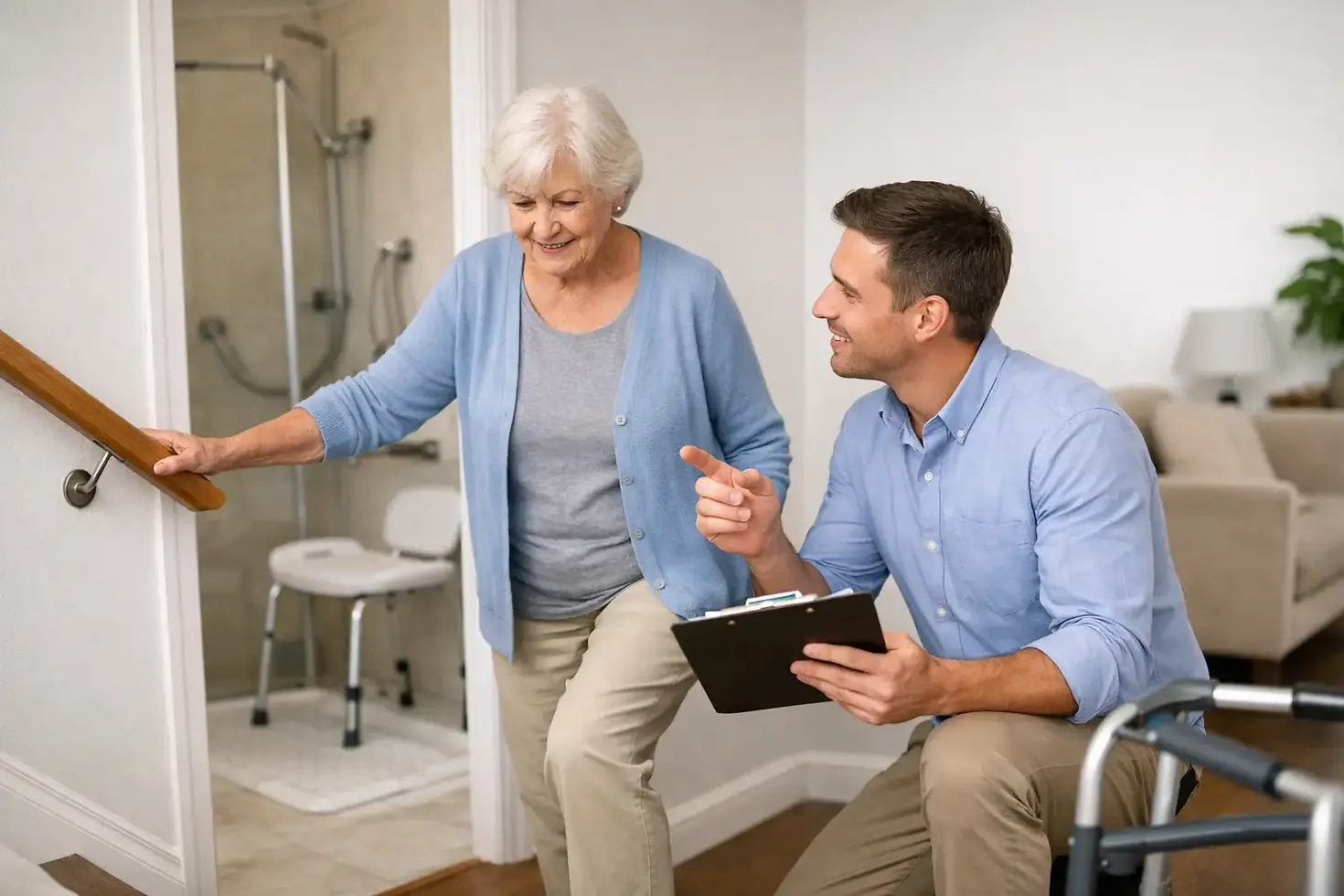
How a Home Safety Assessment for Falls Helps
A hallway rug that catches a toe. A dimly lit path to the bathroom. A favorite chair that has become harder to rise from. Falls rarely come from one dramatic mistake. More often, they happen when a small home hazard meets a moment of fatigue, reduced balance, medication changes, or a rushed trip to answer the door. A home safety assessment for falls helps you spot those moments early, so your home continues to support the life you want to live.
The goal is not to make your home feel clinical or take away the things you enjoy. It is to make everyday movement - getting out of bed, preparing a meal, showering, carrying laundry, and stepping outside - feel more secure. For many older adults, a few well-chosen changes paired with the right strength and balance work can make a meaningful difference.
What a Home Safety Assessment for Falls Looks At
A thoughtful assessment looks beyond obvious clutter. It considers how you move through your actual routines, where you hold onto furniture, whether you need both hands to get up from a chair, and what happens when you turn, reach, or carry something.
Your health and mobility matter just as much as the layout of the house. A person recovering from hip surgery may need a different plan than someone who feels unsteady only at night. Arthritis, vision changes, foot numbness, dizziness, medication side effects, and reduced leg strength can all affect fall risk. A home that works well for one person may not be the safest setup for another.
A physical therapist can observe movement in context. Rather than asking you to describe why the front steps feel difficult, they can watch how you approach the steps, use the railing, place your feet, and manage the door. That detail leads to practical recommendations that fit your abilities and your goals.
Start With the Places You Use Most
Entryways, halls, and living areas
Clear, predictable walking paths matter. Remove loose cords, low furniture, small stools, and stacks of magazines from frequently traveled routes. Area rugs deserve special attention. A rug that slides, curls at the edges, or bunches underfoot is a risk. Some can be secured with non-slip backing; others are simply safer to remove.
Lighting should help you see changes in flooring, pets, and objects left in the path. Make sure switches are easy to reach at each entrance. Nightlights can be especially helpful between the bedroom and bathroom, but choose lighting that is bright enough to see clearly without causing glare.
Look at seating as well. Very low, soft chairs can be comfortable but difficult to exit safely, especially when leg strength is limited. A firmer chair with armrests may make standing easier without changing the character of your room. If you routinely push off a coffee table or grab an unstable piece of furniture to stand, that is worth addressing.
Kitchen and laundry areas
The kitchen asks you to turn, reach, carry, and stand for long periods. Keep daily-use dishes, cookware, and food at waist to shoulder height when possible. Reaching high overhead or bending deep into low cabinets can challenge balance, particularly when holding something heavy.
Avoid climbing on chairs or unstable step stools. If access to higher shelves is necessary, a sturdy step stool with a handrail may be appropriate for some people, but it depends on balance, vision, and confidence. Often, reorganizing storage is the simpler answer.
In the laundry area, avoid carrying an overfilled basket that blocks your view of the floor. A rolling cart, smaller loads, or a place to set items down at a comfortable height can reduce strain. Check for slick flooring, loose mats, and awkward turns around machines.
Bathroom safety without losing comfort
Bathrooms combine wet surfaces, tight spaces, and frequent transitions from sitting to standing. Non-slip surfaces in the tub or shower, a stable bath mat outside the shower, and good lighting are foundational. A towel bar is not designed to support body weight, so it should never be treated like a grab bar.
Properly installed grab bars near the toilet and in the bathing area can provide reliable support. Placement matters. A bar that is too far away or installed at an uncomfortable height may not help when you need it. Shower chairs, handheld showerheads, and raised toilet seats can also be useful, particularly after surgery or during a period of weakness.
Not everyone needs every bathroom adaptation. The right choice depends on how you transfer, your available space, and whether you can safely manage the equipment. A personalized recommendation is better than filling the bathroom with devices you do not need.
Bedrooms and nighttime routes
Getting up quickly at night is a common fall scenario. Keep a phone, glasses, and a light within easy reach of the bed so you do not need to stretch or search in the dark. The route to the bathroom should be clear and consistently lit.
Bed height matters more than many people realize. When sitting on the edge of the bed, your feet should reach the floor securely. If the bed is too high, getting down can feel like a drop. If it is too low, standing may require more leg strength and effort than you have first thing in the morning.
Take a moment before standing. Sit at the edge of the bed, let your body adjust, and make sure you are steady before walking. This is especially useful if you have experienced dizziness or take medications that affect blood pressure.
Stairs, patios, and outdoor spaces
Stairs need secure handrails, good visibility, and a surface in good repair. Ideally, use the handrail every time, even on familiar steps. Loose carpeting, uneven tread edges, and poor lighting can turn a routine trip upstairs into a hazard.
Outside, Arizona homes present their own considerations. Bright sun can make it hard to see a change in elevation, while smooth tile around a pool or patio can become slick when wet. Check walkways for cracks, uneven pavers, hoses, and overgrown landscaping. A well-lit path from the driveway to the front door is helpful when returning home after sunset.
The Home Is Only Part of Fall Prevention
Removing hazards is valuable, but it cannot replace the physical skills that keep you steady. Stronger legs help you rise from a chair, manage curbs, and recover when you trip. Better balance helps you turn, reach, and walk over changing surfaces with more control. Mobility in the ankles, hips, and spine can make everyday movements less awkward and less tiring.
This is where a common mistake can occur: treating fall prevention as a checklist you finish once. Homes change, health changes, and routines change. A new medication, a recent illness, a different pair of shoes, or an injury can alter your risk quickly.
A good plan combines home adjustments with movement that is safe and specific to you. That might include practicing sit-to-stands from your own chair, stepping up at your own doorway, or learning a safer way to navigate the route you take to the mailbox. The exercises should challenge you appropriately, not leave you fearful or unsupported.
When to Ask for Professional Help
It is wise to seek guidance after any fall, even if you were not injured. A fall can signal a change in strength, balance, vision, medication response, or the home environment. You should also consider an assessment if you have begun avoiding stairs, holding onto furniture while walking, feeling unsteady when turning, or limiting activities you once enjoyed.
For adult children and caregivers, watch for quieter signs: unopened mail because the walk to the mailbox feels difficult, hesitation getting into a car, bruises with no clear explanation, or a loved one who has stopped bathing independently because the shower feels unsafe. These are not failures. They are useful signals that support may be needed.
An in-home physical therapy evaluation can bring the clinical and practical sides together. At Flint Physiotherapy, a Doctor of Physical Therapy can assess how you move in your own environment, identify meaningful risks, and build a plan around the activities that matter to you.
Your retirement years should leave room for dinners with friends, walks around the neighborhood, time with grandchildren, and the comfort of your own home. A safer home is not about moving less carefully through life. It is about building the confidence and strength to keep moving through it.


Comments