


A Guide to Functional Strength for Older Adults
Getting up from a favorite chair without pushing off the armrests. Carrying groceries from the car. Stepping over the edge of a shower. These everyday moments are where strength matters most. This guide to functional strength explains how older adults can train for the movements that support an active, independent life - not simply for a number on a dumbbell.
Functional strength is not reserved for athletes or people who enjoy a traditional gym. It is the practical strength that helps you move through your own day with more control, less fatigue, and greater confidence. Whether your goal is returning to golf after surgery, walking the neighborhood more steadily, or staying able to live comfortably at home, the right program should connect directly to the life you want to lead.
What Functional Strength Means in Everyday Life
Functional strength is the ability to produce and control movement during real activities. It combines strength with balance, coordination, mobility, and endurance. A person may be able to lift a weight while seated, for example, but still find it difficult to rise from a low couch if their leg strength, ankle mobility, and balance have not been trained together.
For older adults, functional training commonly focuses on movements such as standing up and sitting down, stepping up, bending safely, carrying objects, reaching, turning, and walking over changing surfaces. These are not flashy exercises. They are the building blocks of independence.
The goal is not to make daily life feel like a workout. The goal is to make daily life feel more manageable. When a movement is practiced gradually and appropriately, your body learns to handle it with better efficiency and confidence.
A Guide to Functional Strength Starts With Your Goals
A useful strength plan begins with a question: What would you like to do more easily?
For one person, that may mean lifting a leg into an SUV without using their hands. For another, it may mean walking through a museum with family, getting down to garden, or feeling secure while carrying a laundry basket. These goals guide the exercise selection, the starting level, and the pace of progression.
This is why generic workouts can miss the mark. A program designed for a healthy 30-year-old at a commercial gym may not account for arthritis, osteoporosis, a recent joint replacement, Parkinson's disease, cardiac history, or a fear of falling. Even two people of the same age can need very different plans.
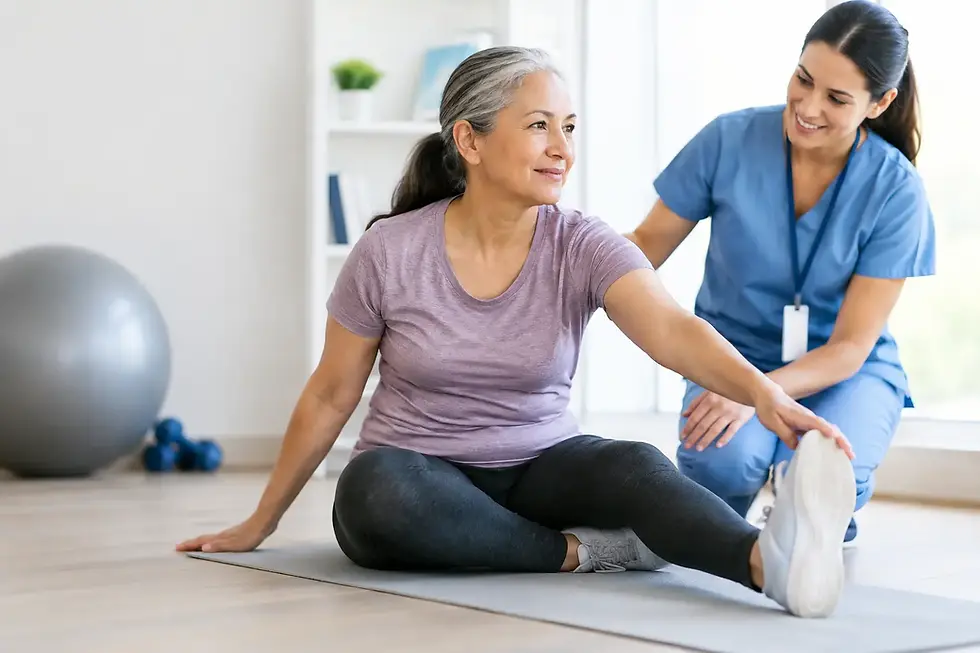
A physical therapist can assess how you stand, walk, transfer, reach, and move in the spaces you use every day. In-home care adds valuable context. A therapist can see the height of your favorite chair, the layout of your staircase, the floor surfaces in your home, and the places where you tend to feel unsteady. That allows training to be personal rather than theoretical.
The Movements That Matter Most
A balanced functional strength program usually includes several movement patterns. The exact exercises depend on your health history and current ability, but the purpose of each pattern remains consistent.
Sit-to-Stand Strength
Practicing a controlled rise from a chair develops the hips and thighs used for transfers, toileting, getting out of a car, and recovering from a low seat. Chair height matters. Starting from a higher, firm chair may be appropriate at first, while a lower surface creates a greater challenge later.
The goal is quality, not speed. Feet should be positioned securely, the body should lean forward enough to shift weight over the feet, and the knees should track comfortably. Pain, dizziness, or a sudden loss of balance are signs to pause and get professional guidance.
Stepping and Single-Leg Control
Every curb, stair, and uneven patch of sidewalk asks you to briefly support yourself on one leg. Step-ups, controlled stair practice, and supported balance work can improve the leg strength and stability needed for these situations.
This work is especially valuable for fall prevention, but it should be matched to the person. Holding a counter for support is not a failure. It is a smart way to practice safely while building capacity.
Carrying, Reaching, and Upper-Body Strength
Upper-body strength helps with groceries, cookware, doors, walkers, and using the arms of a chair when needed. Exercises may include controlled pressing, pulling, carrying light objects, and reaching tasks that reflect the demands of home life.
The right amount of challenge matters. Very light exercise may not create enough change, while too much load or poor form can aggravate a painful shoulder or back. Progressive resistance, introduced in small steps, is often the most sustainable approach.
Bending, Turning, and Walking Endurance
Many falls and aches happen during transitions: turning to answer the phone, bending to pick up a dropped item, or walking while carrying something. Functional programs should include safe hip-hinge practice, direction changes, and walking work when appropriate.
Walking is excellent activity, but walking alone may not fully maintain strength. It does not always provide enough challenge for the muscles that help you rise from a chair, climb stairs, or regain balance after a misstep. Pairing walking with targeted strength work often provides more complete support for mobility.
How Often Should You Train?
Consistency matters more than exhausting workouts. Many older adults do well with strength training two or three nonconsecutive days per week, along with regular movement on other days. But the right schedule depends on your recovery, medical conditions, medications, sleep, and current activity level.
A person recovering from surgery may need shorter, more frequent sessions at first. Someone who is already active may benefit from fewer sessions with more resistance or complexity. The body needs enough challenge to adapt, but it also needs time to recover.
You should expect some normal muscle fatigue when beginning or progressing a program. Sharp pain, joint swelling, chest discomfort, unusual shortness of breath, or symptoms that worsen after exercise deserve attention. Strength training should help you feel more capable over time, not repeatedly leave you depleted.
Make the Home Part of the Program
The best functional exercises often use familiar parts of the home: a sturdy chair, a countertop for support, a hallway for walking practice, or a step that reflects the one at the front door. This does not mean every household object is safe exercise equipment. Stability and supervision matter.
Your environment can also reveal barriers worth addressing. Loose rugs, dim lighting, cluttered walkways, and poorly placed furniture can increase the difficulty of moving safely, even when strength is improving. A stronger body and a safer home work together.
Family members can be helpful partners, particularly when they understand the goal of an exercise. Encouragement is useful. Taking over every task is not always useful. When an older adult can safely practice doing meaningful activities, that practice helps preserve skill and confidence.
Progress Without Rushing
Functional strength improves through gradual progression. You might begin by using both hands on a counter during standing exercises, then use one hand, then use lighter support. You may start with a higher chair and later work from a lower one. Small gains count because they add up to meaningful change.
Progress is not always linear. A poor night's sleep, an arthritis flare, travel, illness, or a new medication can affect how you feel on a given day. Adjusting the session is part of good training, not a setback. The long-term goal is to keep moving forward while respecting what your body is telling you.
At Flint Physiotherapy, a Doctor of Physical Therapy can create a program around your specific home, health needs, and personal goals. That individualized attention is especially helpful when you are recovering from surgery, managing balance concerns, or unsure which exercises are safe to begin.
Your retirement years should make room for the activities and people you enjoy. Start with one movement that matters to you, practice it safely, and let each small improvement remind you that strength can continue to grow with age.


Comments