

Fall Risk Assessment: A Better Way to Stay Steady
A missed step at the curb, a quick turn in the kitchen, or getting up too fast to answer the door can change a normal day in seconds. A fall risk assessment looks beyond the fall itself to identify the specific reasons it might happen and the practical changes that can help you continue living actively and confidently at home.
For many older adults, the goal is not simply to avoid an injury. It is to keep walking the neighborhood, getting in and out of the car with ease, caring for a garden, traveling, playing with grandchildren, and enjoying the retirement years you worked hard to create. A thoughtful assessment can give you a clear starting point for protecting that freedom.
What Is a Fall Risk Assessment?
A fall risk assessment is a personalized review of the physical, medical, and environmental factors that may make a fall more likely. It is not a pass-or-fail test, and it should never be used to tell someone they are too old or too limited to stay active.
Instead, it helps answer useful questions: Is leg strength making stairs harder? Does balance change when you turn your head or walk on uneven ground? Are medications, vision changes, foot pain, or low blood pressure playing a role? Are there features in the home that make a routine task less safe than it needs to be?
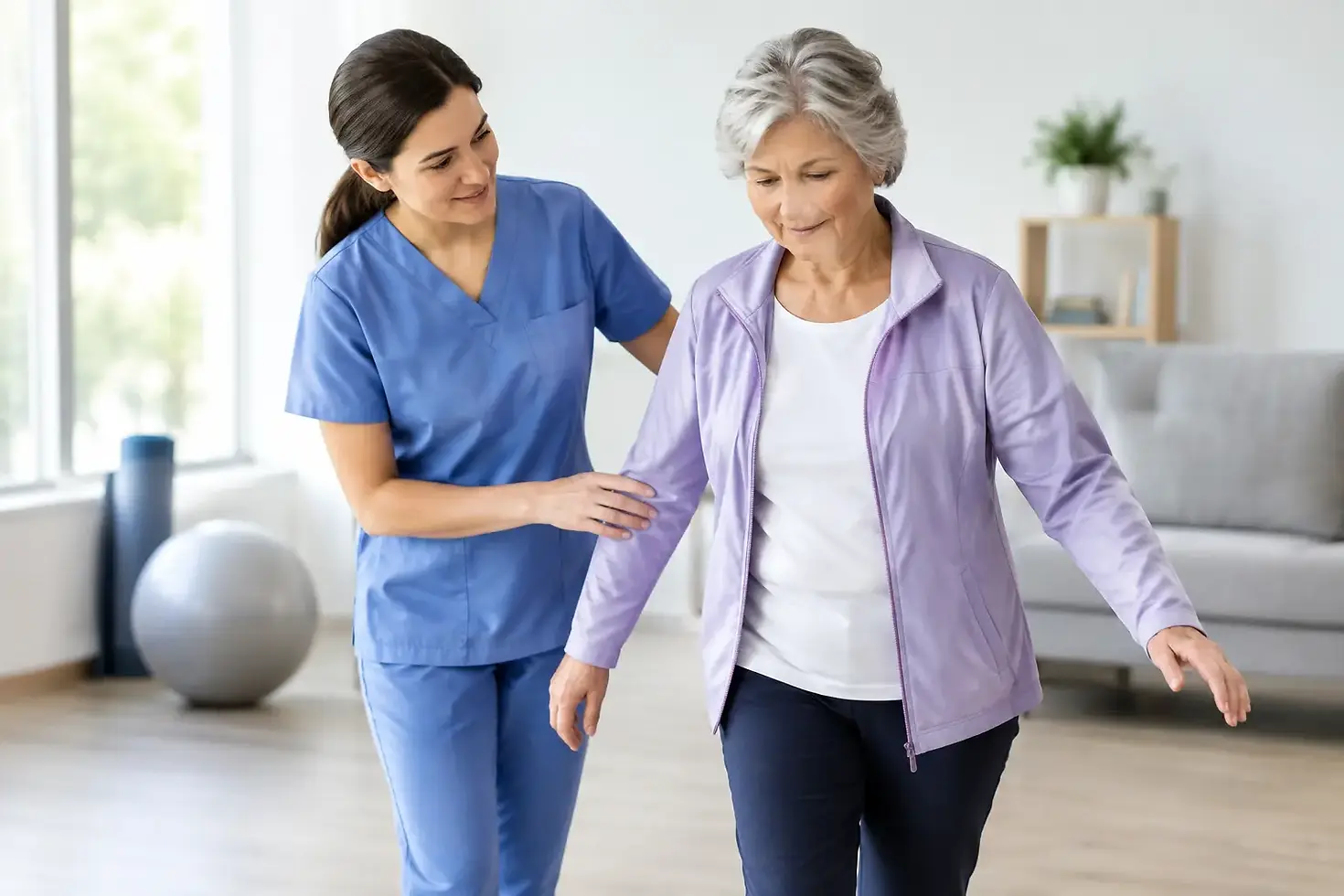
A physical therapist can assess these concerns in the setting where they matter most: your own home. That context is valuable. Walking well across a clinic floor is different from moving through a narrow hallway, stepping over a pet’s bed, reaching into a low cabinet, or navigating a dimly lit bathroom at night.
Why Falls Are Not Usually Caused by One Thing
It is tempting to point to a single cause after a fall: the loose rug, the dog, the slick patio, or the wrong shoes. Those details matter, but falls are often the result of several small factors happening at once.
For example, a person may have slightly weaker hips after a period of illness, take a medication that causes lightheadedness, and rush to the bathroom in low light. None of those issues alone guarantees a fall. Together, they can reduce the margin for error.
This is why a useful fall risk assessment considers the whole person. It looks at movement, health history, routines, home layout, and personal goals. Someone who wants to return to golf may need a different plan than someone focused on safely managing stairs after knee surgery.
What a Physical Therapist May Evaluate
A thorough evaluation begins with a conversation. Your physical therapist may ask whether you have fallen in the past year, had a near-fall, started avoiding certain activities, or noticed changes in walking confidence. They may also ask about dizziness, numbness in the feet, pain, fatigue, vision, footwear, and medications.
Next comes a close look at how you move. This may include observing how you rise from a chair, walk, turn, reach, climb steps, or move from the bed to the bathroom. Simple standardized movement tests can help establish a baseline and show which skills deserve attention.
Strength, balance, and walking ability
Leg strength is central to safe, independent movement. Weakness in the hips, thighs, ankles, or core can make it harder to recover from a wobble, stand from a lower chair, or control a step down from a curb.
Balance is more than standing on one foot. It includes reacting when you are bumped, adjusting to an uneven driveway, turning while carrying laundry, and walking while talking. A therapist may assess both steady standing balance and the dynamic balance needed for everyday life.
Walking speed and gait pattern also offer helpful information. Shuffling, dragging a foot, taking very short steps, or needing furniture for support are not simply things to accept as part of aging. They are signals worth evaluating with care.
Health factors that can affect stability
Some fall risks require coordination with your physician, pharmacist, or other members of your care team. Blood pressure drops when standing, medication side effects, vision changes, hearing concerns, diabetes-related numbness, arthritis pain, and neurological conditions can all affect stability.
Physical therapy does not replace medical care. It can, however, help connect the dots. If dizziness appears whenever you stand up, or if a new medication seems to affect your footing, that observation can be important information to share with your medical provider.
The home environment
A home assessment is not about making your living space feel clinical. It is about making small, sensible adjustments that support the way you actually live.
Your therapist may notice a favorite chair that is difficult to rise from, a bathroom without a stable handhold, cords crossing a walking path, poor lighting near the bed, or a stair rail that is loose. They may also look at outdoor areas, including uneven walkways, pool decks, entry steps, and the route from the garage into the house.
Not every throw rug needs to disappear, and not every home needs expensive renovations. The right changes depend on your balance, mobility, habits, and preferences. Sometimes a better night-light, a clear pathway, appropriate shoes, or a well-placed grab bar makes a meaningful difference.
What Happens After the Assessment?
The assessment should lead to a plan that feels achievable, not overwhelming. If reduced leg strength is the main concern, your program may focus on sit-to-stands, step-ups, and exercises that build stronger hips and ankles. If turning or uneven ground feels unsteady, the plan may include targeted balance practice that gradually becomes more challenging.
The best exercises are specific to your needs and progressed at a safe pace. A person recovering from a hip replacement has different considerations than an active retiree who wants to feel more secure on hiking trails. In both cases, the objective is the same: build the strength, control, and confidence needed for meaningful daily activities.
An assistive device may also be discussed. A cane or walker can improve safety when it is properly fitted and used correctly, but it is not automatically the answer for everyone. The same is true of home modifications. Recommendations should be based on your actual movement and goals, not a one-size-fits-all checklist.
When to Schedule a Fall Risk Assessment
You do not need to wait for a serious fall to seek help. In fact, acting after a near-fall or a change in confidence can prevent a more significant setback.
Consider an assessment if you have fallen or nearly fallen, started holding onto furniture while walking, feel unsteady on stairs, avoid going out because of balance concerns, or notice that getting up from a chair takes more effort. It can also be valuable after surgery, a hospital stay, an illness that reduced your activity, or a medication change.
Family members may notice changes first. If you are concerned about a parent or spouse, approach the conversation with respect. Rather than focusing on what they should stop doing, focus on what they want to keep doing. The question might be, “What would help you feel more comfortable getting around the house?” That preserves dignity while opening the door to support.
A More Personal Approach to Fall Prevention
Generic balance handouts have their place, but meaningful fall prevention is personal. It should account for the fact that one person needs to carry groceries up three front steps while another wants to confidently walk through a busy restaurant or keep up with a partner on vacation.
At Flint Physiotherapy, a doctoral-level physical therapist can evaluate strength, balance, mobility, and home setup where daily life happens. One-on-one care allows time to understand what matters to you, then build a program around the movements and routines that support your independence.
A fall risk assessment is not a prediction that you will fall. It is a practical opportunity to understand your footing, strengthen the areas that need support, and keep choosing the life you want to live. A steadier next step can begin with paying attention to the one you are taking today.


Comments